SOFTWARE · MODELING · MACHINE LEARNING

Selected Technical Work

Implementation and evaluation across energy infrastructure, supply chains, computer vision, and reinforcement learning.

The software projects are independent prototypes. The machine-learning studies were completed in Stanford graduate courses; methods, collaborators, results, and original reports are included below.

INDEPENDENT DEVELOPMENT

Research Software

Interactive prototypes
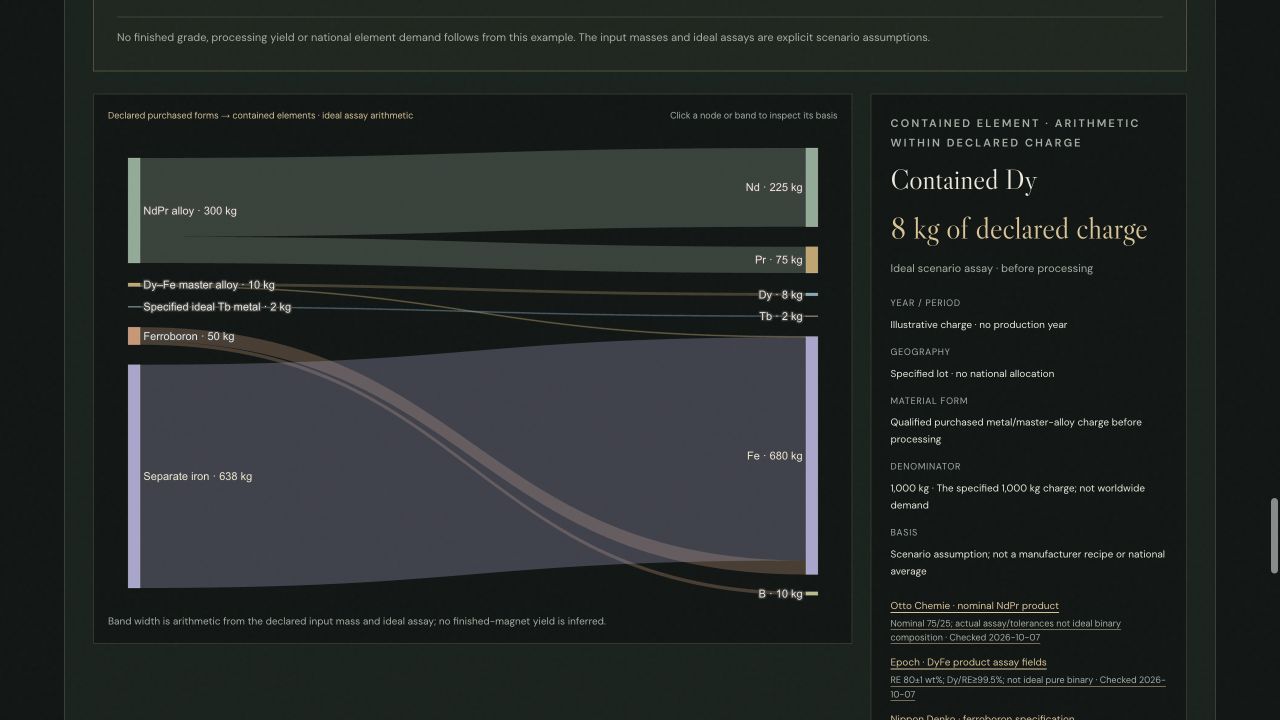
Illustrative material-flow diagram connecting purchased alloys to their contained elements
Illustrative material-flow scenario

CRITICAL MATERIALS · MANUFACTURING · SCENARIO EXPLORATION

Rare-Earth Magnet Supply-Chain Explorer

Built an evidence-linked tool connecting magnet raw materials, processing, manufacturing readiness, and U.S. end uses. Interactive maps trace supply chains, and material-flow scenarios connect supply security, costs, and timing.

Published observations and estimates are distinguished from scenario assumptions. This work is a prototype, not a validated national forecast or a policy recommendation.

Concept visualization of modular data-center racks, power equipment, and cooling systems
Concept visualization

ENERGY SYSTEMS · 4D DESIGN · MODULAR CONSTRUCTION

PowerTwin 4D: Modular Data Center Design and Fast Delivery

Developed an interactive 3D model and 4D timeline that connect power configurations, equipment dependencies, and modular data-center construction. The model integrates electricity supply, grid interconnection, and energy-storage choices with site deployment and construction sequencing.

The model links energy-system planning to time-to-power. The demo uses illustrative planning assumptions; its outputs are not validated engineering designs.

COMPUTER SCIENCE · STANFORD UNIVERSITY

Machine Learning

Computer vision & reinforcement learning · 2026
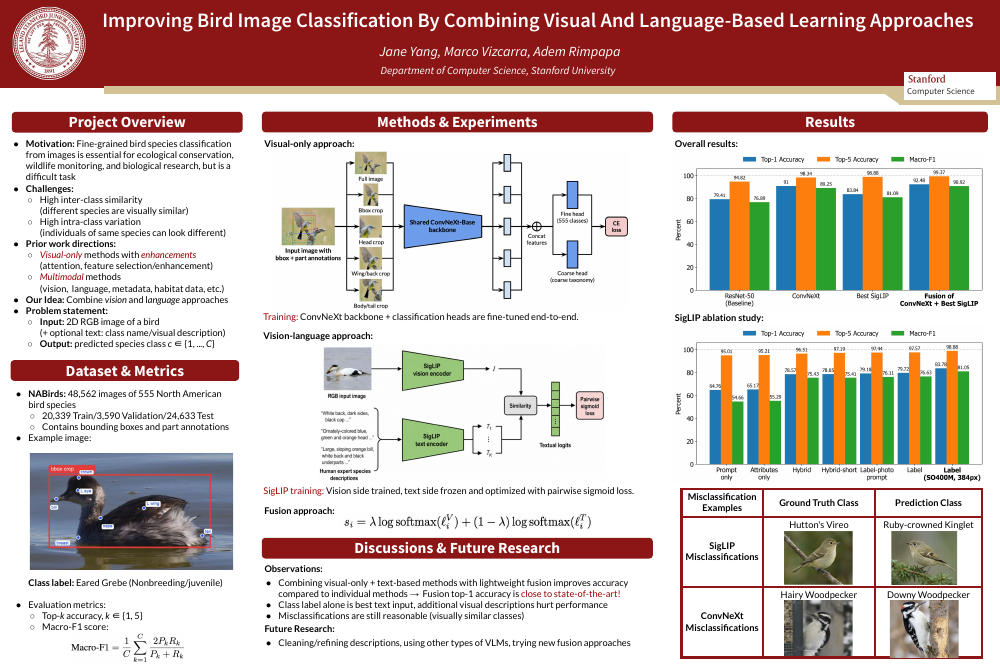
Original bird classification poster, showing the visual and vision-language models and their evaluation

CS231n · Deep Learning for Computer Vision · 2026

Improving Bird Image Classification by Combining Visual and Language-Based Learning Approaches

Jane Yang, Marco Vizcarra, and Adem Rimpapa

Our team combined a part-aware ConvNeXt model with SigLIP vision-language representations through late fusion for fine-grained recognition across 555 NABirds classes. We tested text prompts and analyzed errors between visually similar bird categories.

The fused model achieved 92.48% top-1 accuracy in the reported test evaluation, compared with 91.00% for the ConvNeXt model alone.

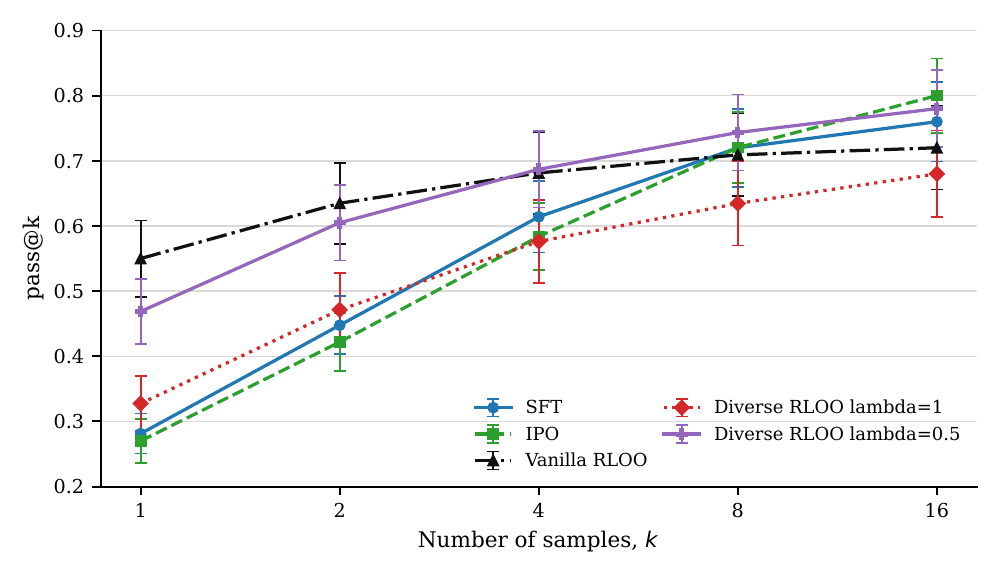
Pass-at-k comparison of SFT, IPO, vanilla RLOO, and diversity-aware RLOO, with prompt-level standard errors

CS224R · Deep Reinforcement Learning · Spring 2026

Diversity-Aware RLOO for Pass@k Reasoning in Countdown

Jane Yang and Will Nathaniel Hansen

Built the Modal training and evaluation workflow and a diversity-aware reward pipeline for Qwen2.5-0.5B. Implemented rewards for distinct, verified arithmetic solutions, ran SFT/IPO/RLOO experiments, and analyzed solution coverage.

The best diversity-aware run improved pass@16 from 0.72 to 0.78 over vanilla RLOO on 50 held-out prompts. IPO reached 0.80; the study did not include multiple training seeds.